
Short answer: yes, Komono watches are good for what they are. They are stylish Belgian fashion watches with Japanese quartz movements, simple dials and comfortable straps, and they cost far less than a Swiss or tool watch. They are not built for diving or hard use, so judge them as everyday style pieces rather than rugged instruments. This Komono watch review covers the brand, the design, the quality, who should buy one and who should look elsewhere.
What is Komono?
Komono is a Belgian accessories brand based in Antwerp. It was founded in 2009 by Raf Maes and Anton Janssens, two former professional snowboarders who met through shared interests in travel, art and design. The name means “little things” in Japanese, which fits a brand that sells small, wearable accessories: watches first, and later sunglasses and optical frames as well.
Because the founders came from outside the traditional watch industry, Komono never tried to imitate Swiss watchmaking. It built its identity on clean design, bold colour choices and affordable prices. Over the years it has collaborated with artists and designers, including a well-known collection with the estate of Jean-Michel Basquiat in 2013, which helped the brand stand out in a crowded fashion-watch market.
Design and style
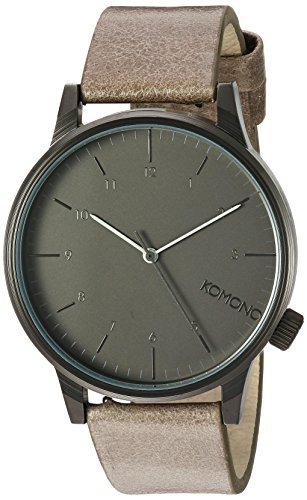
The Komono look is minimalist and modern with a slightly retro edge. Dials are clean and uncluttered, hands are slim, and cases are simple. Most collections are unisex, so the same watch can suit different wrists. You will find colourful straps, printed fabrics, matte metal cases and classic leather, which lets you match a Komono to a casual outfit or a smarter one.
Sizes vary by collection. Some Komono watches are slim and understated, while others are noticeably larger, so check the case diameter against your wrist before you order. Our women’s watch guide explains how to match case size to wrist size.
What to expect from the collections
Komono does not sell one single look. Over the years its range has covered slim minimalist dress watches, larger casual watches, colourful printed straps, mesh bracelets and a few sportier designs. What links them is a consistent attitude: simple dials, unfussy cases and a clear design idea behind every collection. Instead of chasing technical specifications, Komono puts its effort into colours, materials and collaborations.
That variety is useful if you shop in stages. Decide the style first (minimal, casual, bold), then the strap material, then the size. Because the same case often appears with different straps, you can usually find a combination you like without paying extra for features you do not need.
Quality, movement and water resistance
Komono watches typically use Japanese quartz movements, which are accurate, light and need almost no maintenance beyond a battery change every couple of years. If you want to know what is happening inside the case, read our guide to how a quartz watch works, or this short explanation of quartz clocks.
Cases are usually metal with a stainless steel back, and most listings use mineral crystal over the dial. Water resistance is commonly 3 ATM (30 metres), which means splashes, rain and hand washing are fine, but swimming and showering are not. This is the rating most fashion watches carry, and it is worth checking on the exact listing because it can differ between collections.
The weakest point is usually the strap. Fabric and leather straps wear faster than metal bracelets, especially if you sweat or get them wet. A worn strap is a cheap fix compared with replacing the whole watch.
What the specifications really mean
Product listings are full of terms that sound technical but mean very little until someone explains them. Here is what the main ones mean for a typical Komono.
- Japanese quartz movement: a battery-powered movement from a Japanese maker. It is accurate to within a few seconds a month, needs no winding and is cheap to service. It does not give you the mechanical charm of an automatic, but it is far more convenient.
- Mineral crystal: hardened glass over the dial. It resists everyday knocks, but it will pick up fine scratches over time. Sapphire, found on pricier watches, resists scratches much better.
- Stainless steel back: the part that touches your skin. It is more comfortable and more hygienic than cheap plated brass, and it resists corrosion.
- 3 ATM: a lab pressure rating equal to about 30 metres. In practice it means rain and hand washing are fine, while showers, steam and swimming are not.
Common problems and how to avoid them
Fashion watches rarely fail dramatically. Most problems are small and easy to prevent.
- Fogging under the crystal. This usually means moisture got past the seals. Avoid hot showers, saunas and swimming, and stop wearing the watch until it clears.
- A worn or smelly strap. Leather and fabric absorb sweat. Let the strap dry after wearing it, and replace it when it cracks or loses its shape.
- A watch that stops. The battery has usually run out. Change it soon, because an old battery can leak and damage the movement.
- Scratches on the crystal. They are normal with mineral glass. Keep the watch away from rough surfaces such as door frames and bag zips.
- Loose fit. Adjust the strap holes or fit a shorter strap rather than wearing the watch loose, which makes it knock against things.
How to look after a Komono
A few habits keep a fashion watch looking good for years. Wipe the case and strap with a soft, slightly damp cloth after wearing it, then let it dry. Keep leather straps away from water and perfume. Store the watch in a dry place away from strong heat and magnets, and take it off before heavy exercise or washing dishes. If you own several watches, rotating them stops one strap from wearing out first.
Price and value
Komono sits in the affordable fashion-watch segment. You are paying for design, colour and brand style rather than for a premium movement or a sapphire crystal, and the quality is fair for that level. Prices change with sales and seasons, so check the current listing before buying. It is worth watching for discounts before you buy.
Pros and cons
Pros
- Clean, modern design that works for both casual and smart outfits.
- Accurate Japanese quartz movement with minimal upkeep.
- Affordable compared with watches that use better materials.
- Many unisex designs and colour options.
- Comfortable, lightweight straps.
Cons
- Only light water resistance on most models.
- Mineral crystal scratches more easily than sapphire.
- Fabric and leather straps need replacing after a few years.
- Not a tool watch: no screw-down crown, no serious diving capability.
- Resale value is low, as with most fashion watches.
More Komono watches to compare
Product offers are temporarily unavailable.
Who should buy a Komono watch?
A Komono suits you if you want a distinctive, good-looking everyday watch without spending a lot. It makes a good first watch, a good gift, and a good second watch for days when you want something light and colourful. It is also a sensible pick if you like to change straps and styles often.
Skip it if you need real water resistance, a rugged field watch or an investment piece. For harder use, a Casio, Timex or a proper dive watch will serve you better. If you are still choosing a budget, our guide to the best watches under $100 shows what other brands offer at similar levels.
How Komono compares with other fashion watches
Komono competes with other design-led brands such as MVMT, Daniel Wellington and Nixon. The difference is mostly personality. Komono leans towards bolder colours, printed straps and artistic collaborations, while many rivals focus on a single minimalist look. Neither approach is better in technical terms, since most of these brands use similar Japanese quartz movements and similar water resistance. Pick the one whose style you would still enjoy wearing in two years. For a different take on affordable style, see our Ice-Watch review.
How to choose the right Komono for you
Choosing well comes down to three questions: how big is your wrist, where will you wear it, and how bold do you want it to look?
Choose by wrist size
Measure your wrist with a soft tape, then compare it with the case diameter in the listing. A small wrist (under about 15 cm) usually suits a smaller, slimmer case, while larger wrists can carry bigger dials. If the lugs, the parts that hold the strap, stick out past the edge of your wrist, the watch is too big. Our guide to choosing a women’s watch by wrist size has a simple size table that works for any watch.
Choose by occasion
- Office and smart casual: a slim case with a leather strap and a plain dial.
- Weekend and travel: a lighter case on a fabric or rubber strap that tolerates sweat.
- Daily wear: a clear dial with simple markers, so you can read the time at a glance.
Choose by personality
Komono is at its best when the watch is part of your style. If you prefer to blend in, pick a neutral dial and a dark strap. If you want a talking point, choose a printed strap or a bright colour. Both approaches work, and you can change the mood later with a new strap.
A Komono as a gift
Komono works well as a gift because the design appeals to a wide range of tastes and the price is modest. Choose a neutral colour if you are unsure, check the strap length, and keep the receipt in case the size needs adjusting. A second strap in a different colour makes a thoughtful add-on.
Tips before you buy
- Check the exact water resistance on the listing, not just the brand’s general claims.
- Measure your wrist and compare it with the case diameter and strap length.
- Buy from an authorised seller or a trusted retailer, since fashion watches are widely copied.
- Look at the return policy, because colour and size are hard to judge from photos.
- Keep the watch dry. A 3 ATM rating is not a reason to wear it in the shower or pool.
Watches you may like on Amazon


Watch the video
Frequently asked questions
Are Komono watches good?
Yes, for everyday style. They offer accurate Japanese quartz movements, clean designs and comfortable straps at an affordable price. They are not built for heavy use, so treat them as fashion watches rather than tool watches.
Are Komono watches good quality?
The quality is good for the price: solid metal cases, steel backs and reliable quartz movements. The straps and mineral crystals are the parts that wear first, and a worn strap is a cheap fix.
Where are Komono watches made?
Komono is designed in Antwerp, Belgium. The brand is Belgian, but the watches are not Swiss made, and retailer brand profiles list production in China. This is common for affordable fashion watches.
What does Komono mean?
Komono means “little things” in Japanese. The founders chose it for a brand built around small, wearable accessories.
Are Komono watches waterproof?
Not fully. Most Komono watches are rated at 3 ATM (30 metres), which handles rain and splashes only. Do not swim or shower in them, and check the exact rating on the listing.
Are Komono watches unisex?
Many Komono collections are designed as unisex watches. Case sizes differ, so check the diameter and strap length to make sure the watch fits your wrist.
Is Komono a luxury brand?
No. Komono is an affordable fashion brand. Its appeal is design and colour, not precious materials or Swiss movements.
How long does a Komono battery last?
A quartz battery typically lasts about two years, though this varies by model and use. Replace it promptly when the watch stops, since an old battery can leak.
Can I change the strap on a Komono?
Usually yes. Most fashion watches use standard spring bars, so you can change the strap with a small tool. Check the strap width in the listing first so that the new one fits the lugs.
Do Komono watches come with a warranty?
Retailer listings often mention a one-year manufacturer warranty, but terms depend on the seller and country. Check the warranty details before you buy, and keep the receipt.
How can I tell if a Komono is genuine?
Buy from authorised retailers or the brand’s own store, and be cautious about prices that look too good to be true. Compare the packaging, the engraving on the case back and the product photos with the official listing.
Which is better, Komono or MVMT?
Both are design-led fashion brands with Japanese quartz movements and light water resistance, so the choice is mostly about style. Komono tends to be bolder and more artistic, while MVMT is cleaner and more classic. Try both on if you can, or compare listings side by side.
Does Komono make anything besides watches?
Yes. Besides watches, Komono makes sunglasses and optical frames.
The verdict
Komono is a good choice if you want a stylish, affordable watch with a reliable quartz movement and a look that stands out. Accept its limits, which are light water resistance and straps that wear, and you get a lot of style for a modest outlay. If you want something sturdier for outdoor use, or something in a more classic style, look at our everyday watch guide instead.
Related guides
Best watches under $100 | Ice-Watch review | Best women’s watches | Best everyday watch
Related reading: French-Style Classic Watches: What to Know and Best Picks | Skeleton and Dress Watches: What to Know and Best Picks


