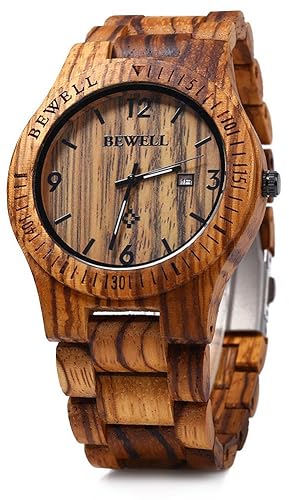
Short answer: this guide explains how to choose wooden wristwatches for men so you can pick with confidence, whatever the brand. A good wooden watch is light, warm to the touch and distinctive, but it is also a more delicate object than a steel watch. Choose a dense wood, a quartz movement from a known maker and a case that is sealed well enough for daily wear, and treat it with a little care.
Why people choose wooden watches
Wooden watches appeal because each one looks slightly different. The grain, color and pattern change from piece to piece, so no two are exactly alike. They are also very light, which makes them comfortable on warm days and for people who dislike the weight of steel. Many buyers like the natural look, and wood works well with casual clothes, linen shirts and outdoor styles. They also make popular gifts, because they feel personal without being expensive.
Which woods are used
- Walnut: a medium-brown wood with a soft, even grain. It looks classic and is reasonably hard.
- Ebony: very dark and dense, with a rich finish. It resists scratches better than softer woods.
- Zebrawood: distinctive striped grain with strong contrast and a bold look.
- Sandalwood and rosewood: warmer tones with a polished feel, often used for the bracelets.
- Maple and bamboo: lighter colors and a clean, modern appearance.
Denser woods generally resist scratches and dents better, while lighter woods feel more casual and can show marks sooner. A clear protective coating helps any of them.
How a wooden watch is built
Most wooden watches use a quartz movement from a reliable manufacturer, often a Japanese one such as Miyota, with a wooden case, a wooden or metal and wood bracelet and a mineral crystal. A quartz movement keeps accurate time, needs no winding and is cheap to replace. Mechanical wooden watches exist, but they are less common and cost more. A few models combine a steel core with a wooden outer layer to improve strength.


Water resistance: what to expect
Wood and water do not mix well. Most wooden watches are described as splash resistant, which means they can handle a few drops of rain or washing hands, but not swimming or showering. Water can cause the wood to swell or crack and can get past the seals. Do not wear a wooden watch in a pool, sauna or shower, and dry it right away if it gets wet. If a listing claims a high water resistance rating, read it carefully and treat it with caution.
Sizes and wrist fit
Wooden cases range from about 36 mm to more than 46 mm. For most men, 40 to 44 mm is a comfortable range. Look at the lug-to-lug length as well as the diameter, because a long case can overhang a slim wrist. Wooden bracelets have adjustable links, and it is easy to take a link out, but a bracelet that is too tight will be uncomfortable and can stress the clasp. If you are between sizes, a strap with several holes is more forgiving than a fixed bracelet.
Bracelet or strap
A wooden bracelet looks distinctive but can be fragile. The links are often joined by small pins, and a hard knock can break one. A leather, canvas or nylon strap is lighter on maintenance and easy to replace, and it suits a wooden case well. If you want a bracelet, look for a clasp that is metal and secure, and check whether spare links are available.
Price and what to expect
Wooden watches are sold across a wide range. Simple quartz models start at roughly $30 to $60, while well-finished designs with sapphire crystal or special woods can run from about $100 to $300 or more. Higher prices usually buy a better finish, a more reliable seal and better support, not a more accurate movement. Prices change often, so check the current listing before you buy.
How to look after a wooden watch
Keep the watch away from water, steam, strong heat and direct sunlight for long periods, because all of these can dry or swell the wood. Avoid perfume and hand sanitizer, which can mark the finish. Wipe the case with a dry soft cloth after wear. A tiny amount of wood-safe oil or wax can restore a dull surface, but check what the maker recommends first. Store the watch in a box or pouch, away from sharp objects. Because the movement is quartz, the battery will need replacing roughly every one to two years, and it is best to have a shop do it so the seals are closed properly.
Wood versus steel
A steel watch is tougher, handles water and lasts for decades. A wooden watch is lighter, warmer and more individual, but it needs more care and will age differently. Many people own a wooden watch as a second watch for weekends and keep a steel one for work and sport. If this is your only watch, choose a dense wood and a protective finish, and be ready to treat it gently.
Mistakes to avoid
- Wearing a wooden watch in the shower, pool or sea.
- Choosing a case that is too big for the wrist.
- Assuming all wood is equally tough.
- Ignoring the movement brand and the battery details.
- Leaving the watch on a hot dashboard or windowsill.
Choosing the right style
Wooden watches come in a few clear styles. Minimalist designs have a plain dial and thin hands and suit office and smart-casual wear. Sporty designs have bolder numerals, a bigger case and sometimes a chronograph-style layout, and they suit weekends. Dressy designs pair dark wood with a slim case and a leather strap. Think about your wardrobe and pick the style you will reach for most often, since the best watch is the one you actually wear.
Color matters as well. Dark woods such as ebony and walnut look more formal and hide small scratches. Light woods such as maple and bamboo look relaxed and work well in summer, but they can mark more visibly and may darken with time. The dial color should contrast with the hands so that the time is easy to read.
Buying tips
Read the product description for the exact wood, the movement and the water resistance. Look for clear photos of the back of the watch, the clasp and the crown, because these show the quality of the finish. Check the return policy and the warranty, which is especially useful with a material that can vary from piece to piece. Be careful with listings that use vague terms such as natural material without naming the wood, and with prices that seem far too low for solid wood.
Watch strap materials compared
| Material | Strengths | Watch out for |
|---|---|---|
| Leather | Dressy, ages well, easy to swap | Not water resistant, needs care |
| Stainless steel | Durable, handles water and daily wear | Heavier and bulkier |
| Rubber or silicone | Water resistant, easy to clean, sporty | Can feel sticky in humid weather |
| Nylon or NATO | Light, breathable, quick drying | Casual look, edges can wear over time |
If you swim, pick rubber, steel or nylon rather than untreated leather.
FAQ
Are wooden watches durable?
They are durable enough for normal daily wear if you protect them from water and knocks, but they are less rugged than steel watches.
Can I swim with a wooden watch?
No. Even if the watch is splash resistant, wood and water should be kept apart.
Do wooden watches need servicing?
Quartz models mainly need a battery change every year or two, ideally by a shop.
Are wooden watches real wood?
Reputable ones are, but check the description. Some use a wood veneer or wood-look coating, which is different.
Verdict
Wooden wristwatches for men offer light weight, individual character and a natural look. Pick a dense wood, a quartz movement from a known maker and a comfortable size, keep the watch dry and expect to look after it a little more than a steel one. Buy from a seller with a clear return policy.


