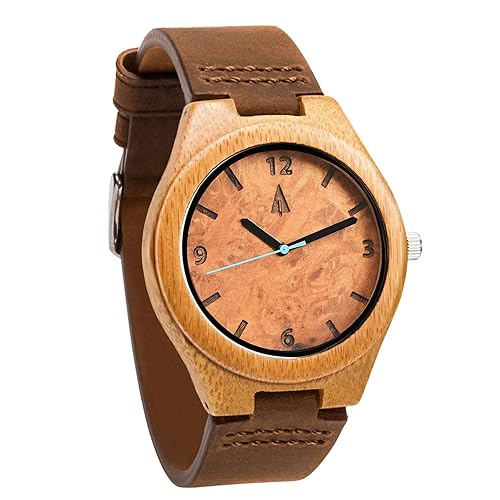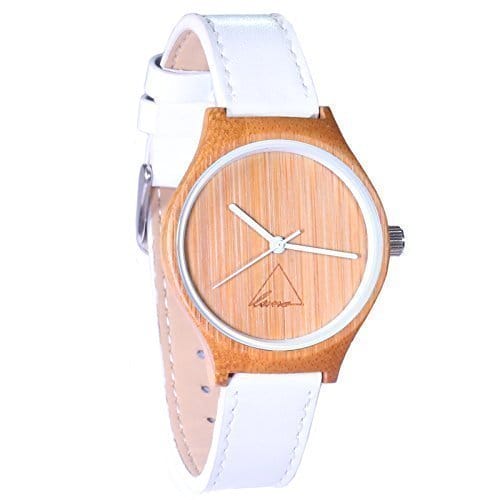
A rosewood watch is a fashion piece that pairs warm, dark wood with a steel case, usually on a Japanese quartz movement. It looks richer than it should for the money, and it feels light on a hot day. It is also less tough than a steel watch, and it doesn’t like water. Here is how to tell a good rosewood watch from a flimsy one, and how to look after it once you own one.
Product offers are temporarily unavailable.
What a rosewood watch actually is
Most rosewood watches are hybrids. The wood sits on the bezel, the dial or the bracelet links, while the case and movement are steel and standard watch parts. Original Grain, for example, lists a Rosewood Barrel with a steel case, a rosewood bezel and a rosewood-and-steel band, powered by a Miyota 8N40 automatic.
That matters because “wood watch” suggests something fragile and all-timber. A hybrid is tougher, and its weight comes from the steel. It also means you can judge the watch like any other: look at the crystal, the movement, the water rating and the warranty.
Why people pick rosewood
Colour is the reason. Rosewood runs from deep brown to reddish dark, and the grain stays visible. Original Grain describes its rosewood as African Pau Rosa, and one listing says the wood comes from eastern and central Africa. Those are the brand’s claims, so treat the sourcing as marketing until you see paperwork.
The second reason is comfort. Wood doesn’t get as hot or cold against the wrist as steel. Wood is also often described as hypoallergenic, which helps if you react to nickel, although a watch with a steel back still touches your skin with steel.
What is inside
Quartz is the default
Retail pages for Original Grain’s Classic list a Japanese Miyota quartz movement with a date window. Other wood-watch makers use similar parts, such as the Japan 2035 quartz that one review attributes to a wooden watch. A retail guide says nearly every wood watch in this price range runs on a Japanese or Chinese quartz movement. If you want a quick primer, our guide to how a quartz watch works covers the basics.
Automatics exist too
Not every rosewood watch is quartz. The Barrel automatic uses a Miyota 8N40 with a skeleton caseback, a sapphire crystal and a 12.75 mm case. That sounds appealing, but the weight and thickness go up. One Original Grain listing gives the case as 46 mm, so check your wrist before you commit.
Water, sweat and scratches
This is where rosewood watches earn their reputation for being delicate. A listing for a Rosewood Classic rates it at 5 ATM, yet says the natural wood shouldn’t be submerged for long periods. That is the honest version of “water resistant”: it handles rain, not a swim.
Scratches are the other issue. One jewellery guide says wood watches scratch and dent more easily than metal or good plastics. Another says to remove the watch for swimming, showers, sweat and rain, and to protect it from wood pests. The same guide notes that a protective lacquer or oil finish reduces damage.
The finish matters too. A retail guide says a good wood watch has a UV-resistant clear coat or a natural oil finish that seals the grain against sweat and sunlight. Without it, the wood can darken unevenly and crack near the lugs. A matte oil finish looks natural but needs reapplying.
Video: a rosewood watch up close
Weight and size: not what you’d guess
People expect wood to mean light. Gear Diary’s reviewer of an Original Grain watch said it was the heaviest watch he had ever worn, because the body and links were stainless steel, though not an unpleasant weight. Another reviewer measured a Barrel at 47 mm wide and 11 mm thick, with a 24 mm band.
The Classic is a more modest 43 mm. So the right size depends on the model, and the quoted weights vary. Measure your wrist and compare the case diameter with a watch you already like.


Where rosewood watches disappoint
Water resistance first. Even the better models are fine for rain and handwashing, and that is all. If you want a watch for the beach, buy a different one.
Quality control is next. Trustpilot reviews of Original Grain are mixed, with many praising craftsmanship and durability and some complaining about timekeeping. One buyer said a gift watch lost anywhere from two to over fourteen minutes after setting. That is one report, not a pattern, but it is a reminder to test the watch in the first weeks and use the return window.
The third issue is the warranty. Original Grain lists a one-year warranty on its Barrel, which is shorter than many mainstream brands offer. If you want a long warranty, see our best watches under $100 for options with a conventional build.
How to care for a rosewood watch
The routine is short. Wipe the wood with a soft dry cloth after wear, and let it air out before you put it away. If it gets wet, dry it straight away. Keep it away from heaters, car dashboards and direct sun for long periods.
Some sellers suggest a thin coat of beeswax or wood oil every few months. That advice fits oiled finishes, so check what yours has before you apply anything. A lacquered watch may not want it. Store the watch dry, away from damp, and out of reach of insects.
If the wood scratches, light marks on an oiled finish can often be blended with fresh oil. Deep gouges are a job for the maker or a repair shop. Replace the battery at a watch shop and ask them to check the seals.
Rosewood against other woods
Original Grain’s range shows how many options exist. A review lists Whisky Barrel, Rosewood Barrel, Sapele with silver, Black with mahogany, Maple Barrel and Zebrawood with rose gold. The woods change the mood: rosewood is dark and warm, maple is pale, zebrawood is striped.
If you aren’t sure which suits you, think about what you wear. Dark rosewood works with navy, grey and earth tones. Paler woods suit summer clothes. Our review of Original Grain watches goes deeper on that brand.
How to read a rosewood watch listing in five minutes
Listings for wood watches bury the useful facts under adjectives. Skip the poetry and find five lines: the case material, the crystal, the movement, the water rating and the warranty. If any of them is missing, treat that as a warning.
A good listing names the steel as 316L, the glass as sapphire or hardened mineral, and the movement as a Miyota or similar Japanese calibre. The Barrel listing from Original Grain is a decent example, since it gives the case size, the thickness, the band width, the movement and the water resistance in one block. Vague pages that say only “natural wood” and “quartz” tell you much less.
Also check the strap or bracelet width. A rosewood-and-steel bracelet with a 22 mm attachment width fits standard straps, while an odd width makes a later swap harder. Dial size is worth a look too, because a 34 mm dial inside a 46 mm case leaves a wide wood bezel, which is part of the look.
Mistakes people make with rosewood watches
Wearing one in the shower is the classic error, and it usually ends in swollen wood and a fogged crystal. A close second is buying on the photo alone. Wood grain varies from piece to piece, so the watch in your hands will not match the picture exactly, and that is part of the charm and part of the risk.
Some buyers also ignore the weight. A steel-heavy hybrid can feel big on a small wrist, which surprises people who expected a light watch. Others forget the battery, then leave a stopped watch in a drawer. Have a shop replace it promptly, because a dead cell can leak.
The last mistake is treating the watch as a long-term heirloom. A rosewood quartz is a pleasant everyday piece, but its finish will age, and parts like the crystal and strap are what you will replace first.
Who a rosewood watch suits
Think of it as a weekend and office-casual piece. It suits someone who likes a distinctive look, wears a watch indoors or on dry days, and doesn’t mind a little care. A first wood watch also makes a friendly gift, because the look is warm and the routine is easy.
It is a poor choice for people who work with their hands, swim often or want one watch for everything. For that job, a sturdier everyday watch is better, and our everyday watch guide covers the options.
Buying tips for a rosewood watch
- Read the case and crystal material, not only the wood. Steel and sapphire or hardened mineral are the good signs.
- Check the water rating, and treat 5 ATM as rain-proof only.
- Look at the movement. Miyota is a sensible name to see.
- Measure your wrist against the case diameter and thickness.
- Look for a return window, so you can test timekeeping.
For more guidance on choosing between brands and types, browse our watch buying guides.
Strap materials compared
| Material | Feels like | Watch out for |
|---|---|---|
| Wood and steel links | Warm, distinctive | Water, scratches, weight |
| Steel | Solid and cool | Heavier, needs resizing |
| Leather | Warm and classic | Dislikes water and sweat |
| Silicone | Soft and light | Lint and stains on light colours |
The table is a general guide, not a statement about any one rosewood model.
Rosewood watch FAQ
Are rosewood watches good quality?
They can be, as long as you read the spec sheet. Good ones pair a real wood bezel or band with a steel case, a sapphire or mineral crystal and a Japanese Miyota movement. Weak ones are mostly veneer and cheap quartz, so look at the movement, the crystal and the finish.
Are rosewood watches waterproof?
No. Some are rated to 5 ATM, which covers rain and hand washing, but a listing for a rosewood quartz model warns that the wood shouldn’t be submerged for long periods. Take it off for swimming, showers and saunas.
Does a rosewood watch need special care?
A little. Wipe off sweat and water, keep it away from heat, and avoid scratching the wood. Some sellers suggest a thin coat of beeswax or wood oil every few months, so check what finish your watch has first.
What movement is inside a rosewood watch?
Usually Japanese quartz. Original Grain lists Miyota quartz in its Classic and a Miyota 8N40 automatic in its Barrel. Nearly every wood watch in the budget range uses a Japanese or Chinese quartz movement.
Is rosewood good for sensitive skin?
Wood is often described as hypoallergenic, and that helps if you react to nickel. A rosewood watch with a steel case or bracelet still touches your skin with steel, so check what the back and clasp are made of.
How heavy is a rosewood watch?
It depends on the build. A reviewer of an Original Grain model called it the heaviest watch they had worn, because the body and links were stainless steel. An all-wood watch is much lighter.
Can I change the strap on a rosewood watch?
On many models, yes, if the strap uses standard spring bars. Wood-and-steel link bracelets usually take standard widths, but check the lug and band width on the listing before you order.
Is a rosewood watch a good gift?
It makes a good casual gift. The look is warm and distinctive, and the care routine is easy. Check the case size and the water rating first, so the watch suits the person who will wear it.
Verdict on rosewood watches
A good rosewood watch is a fun, warm-looking accessory with a sensible quartz movement. It isn’t a tool watch, and it won’t survive water the way a steel diver does. Check the case, the crystal and the water rating, keep it dry, and it will give you a distinctive look for a fair outlay.
Disclosure: some links on this page are affiliate links, and we may earn a commission at no extra cost to you.