Short answer: this guide explains how to choose bamboo watches so you can pick with confidence, whatever the brand. Bamboo watches are light, natural-looking and often more affordable than hardwood ones. Look for a sealed case, a quartz movement from a known maker and a protective finish, and remember that they are not designed for swimming.
What bamboo watches are
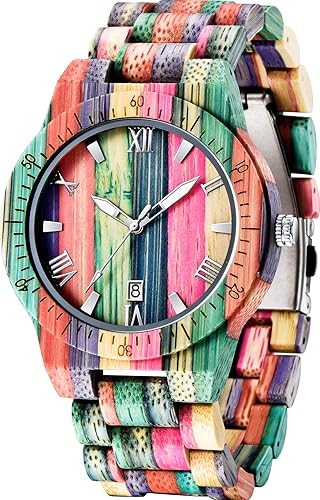
A bamboo watch has a case, and sometimes a bracelet, made from bamboo. Botanically, bamboo is a giant grass rather than a tree, and its stalks are strong for their weight, which makes it a practical material for a watch. Makers usually cut and laminate the bamboo into blocks, shape it into a case and finish it with a clear coating. The look is light and fine-grained, with the typical bamboo lines running through the surface. Some models use carbonized bamboo, heated to give a darker, caramel tone.
Why people choose bamboo
- Light weight: comfortable on the wrist, even in hot weather.
- Distinctive look: the pale, linear grain differs from darker hardwoods.
- Sustainability appeal: bamboo grows quickly and is often promoted as a renewable material, although it is worth checking how a brand sources and processes it.
- Price: often lower than watches made from rare hardwoods.
- Gift value: a natural, individual look that suits many tastes.
Bamboo versus hardwood
Bamboo is usually lighter and paler than hardwoods such as ebony or walnut. It often has a more modern feel. It can be less dense, which means it may mark more easily, so the quality of the protective coating matters. A well-sealed bamboo watch holds up fine for everyday use, but it is not a tough sports watch.


Movement and accuracy
Most bamboo watches use quartz movements, commonly Japanese ones such as Miyota or Seiko-made calibers. Quartz keeps time accurately, needs no winding and is cheap to replace. The battery typically lasts one to two years. A mechanical bamboo watch is rare and costs more. It adds servicing needs that suit enthusiasts rather than casual buyers.
Water resistance
Treat bamboo watches as splash resistant. Rain and hand washing are usually fine, but showers, pools and the sea are best avoided, since water can swell the material, get under the crystal and harm the movement. Dry the watch if it gets wet. If a listing claims higher resistance, read how the maker seals the case and treat the claim with caution.
Case size and fit
Bamboo cases come in a range of sizes, from about 34 mm in women’s models to 45 mm in larger men’s watches. A diameter of 38 to 42 mm suits most wrists. Check the thickness and lug length too, because a watch with long lugs can overhang a slim wrist. Bamboo bracelets and straps vary, so measure your wrist and compare it with the listing. Bamboo bracelets are adjustable by removing links. It is easy to take one out, but go slowly and keep the spare links.
Style and dial
Bamboo watches often have clean, minimalist dials. White, black and green dials are popular, and the pale case makes a nice contrast with a dark face. Make sure the hands stand out from the dial, since a light case can make a low-contrast watch harder to read. A date window is a useful extra, but a plain three-hand layout is the simplest and often the most elegant.
Price and what to expect
Bamboo watches generally cost roughly $30 to $80 for simple quartz models, while better finished pieces with sapphire crystal and a refined bracelet can reach about $100 to $200. Higher prices usually bring a better seal, better finishing and more reliable service. Prices change from seller to seller, so look at the current listing before you decide.
How to look after a bamboo watch
Wipe the watch with a soft dry cloth after wearing it. Keep it away from heat, steam, direct sunlight for long periods, perfume and hand sanitizer. Store it in a pouch or box. If the surface becomes dull, a small amount of wood-safe wax may help, but follow the maker’s advice. Replace the battery at a shop before it leaks, and ask them to check the case seals. Avoid leaving the watch on a radiator or in a hot car, because heat can dry the material and cause cracks.
Who bamboo watches suit
They suit people who want a light, natural watch for everyday wear in an office, at home or on holiday. Anyone who likes natural materials will enjoy one. Unisex styles work well for wearers of any gender. Anyone who needs a watch for swimming, heavy work or sport is better served by a resin or steel model with a stated water resistance of at least 100 meters.
Mistakes to avoid
- Wearing a bamboo watch in water.
- Assuming every bamboo-look watch is real bamboo.
- Choosing a case that is too big for your wrist.
- Ignoring the protective finish and seals.
- Forgetting to check the return policy.
How bamboo watches are made
Makers harvest bamboo stalks, cut them into strips and dry them to reduce moisture. Makers press and glue the strips into solid blocks or laminated layers, then cut and shape them into cases and links on a lathe or milling machine. After sanding, a clear finish seals the surface against moisture and small scratches. Makers heat carbonized bamboo before shaping, which darkens the color through the whole thickness of the material. The case is then fitted with a quartz movement, a dial, hands and a crystal. Screws or a press fit secure the back.
Because bamboo is a natural material, the grain and node marks differ from one watch to the next. A node line across a link or case is normal and often considered part of the charm. Cracks, rough edges or gaps around the crystal are not, so look closely at customer photos before you buy.
Bamboo watches by wearer
For men, larger cases with a darker carbonized finish and a bracelet or leather strap look sporty yet natural. For women, smaller light-toned cases with slim straps or bracelets suit daily wear and work well with summer outfits. Unisex designs with a round case of about 38 to 40 mm and a plain dial fit most wrists. If you are buying a gift, a neutral design with a simple dial is the safest option. A seller with an easy return policy removes the risk of a wrong size.
Comparing bamboo with other natural materials
Cork, stone and recycled materials also appear in watch cases, but bamboo and wood remain the most common. Bamboo is lighter than most woods and gives a cleaner, more modern look. Hardwoods feel denser and more traditional. Cork is softer and warmer but wears quickly. Choose bamboo if you want the lightest feel and a pale tone, and choose a hardwood if scratch resistance and a deeper color matter more.
Watch strap materials compared
| Material | Strengths | Watch out for |
|---|---|---|
| Leather | Dressy, ages well, easy to swap | Not water resistant, needs care |
| Stainless steel | Durable, handles water and daily wear | Heavier and bulkier |
| Rubber or silicone | Water resistant, easy to clean, sporty | Can feel sticky in humid weather |
| Nylon or NATO | Light, breathable, quick drying | Casual look, edges can wear over time |
If you swim, pick rubber, steel or nylon rather than untreated leather.
FAQ
Are bamboo watches durable?
They are durable enough for normal daily wear if protected from water, heat and knocks.
Are bamboo watches waterproof?
No. Treat them as splash resistant and keep them dry.
Is bamboo a wood?
Technically it is a grass, though makers use it in a similar way to wood and often sold alongside wooden watches.
How long does the battery last?
Usually one to two years for a quartz movement.
Verdict
Bamboo watches are light, natural and affordable, and they suit relaxed everyday wear. Choose a quartz movement from a known maker, a sealed case and a size that fits your wrist, keep the watch dry and buy from a seller with a clear return policy.