Short answer: this guide explains how to choose wooden watches so you can pick with confidence, whatever the brand. The main decisions are the wood, the movement, the size and how much water contact you expect. Pick a dense wood, a quartz movement and a size that suits your wrist, keep the watch dry and it can look good for years.
Why wooden watches are popular
Wooden watches stand out in a market full of steel and plastic. Each one has its own grain, so no two look exactly the same. They are light, warm against the skin and available in men’s, women’s and unisex sizes. Many buyers also like that wood is a natural material, and some makers highlight responsibly sourced timber or a tree-planting program. If sustainability matters to you, ask where the wood comes from, as claims vary between brands.
Choosing a watch for men or women
Men’s wooden watches usually have cases of about 40 to 46 mm, with bold dials and sturdier bracelets. Women’s models are often 30 to 38 mm, with thinner straps and lighter tones such as maple, bamboo and rosewood. The division is not strict. Many women prefer larger cases, and many men like a smaller, classic size. Judge the watch by how it sits on your own wrist, not by the label.
What to know about the woods
- Walnut: a classic medium-brown with a gentle grain.
- Ebony: very dark and dense, with a smooth polish.
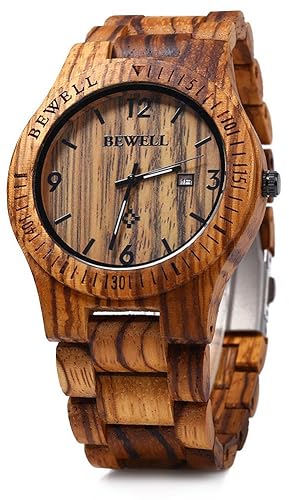
- Zebrawood: striking stripes for a bold look.
- Sandalwood and rosewood: warm reddish tones.
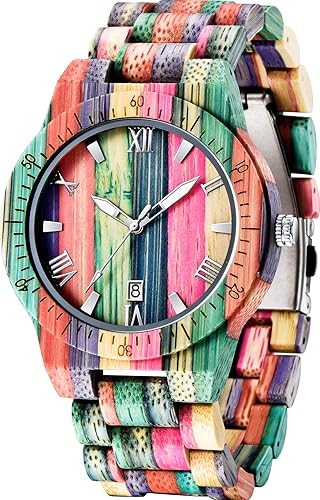
- Maple and bamboo: light, modern and easy to pair with casual clothes.
Denser woods are more resistant to scratches and dents, while lighter woods can show marks sooner. A clear protective finish helps all of them.


Movements and accuracy
Almost all wooden watches use a quartz movement, often from a Japanese maker such as Miyota, because quartz is accurate, light and cheap to replace. A good quartz watch stays within a few seconds a month. Mechanical wooden watches exist but are rarer and more expensive. Quartz also suits wood well, since a mechanical movement needs regular servicing and wood reacts to humidity and temperature.
Water and wood do not mix
Wooden watches are splash resistant at best. A few drops of rain or washing hands is usually fine, but showers, swimming and saunas can swell the wood, loosen the seals and damage the movement. Take the watch off before washing up and dry it if it gets wet. If a listing mentions a high water resistance number, treat it with caution and look for details of how the case is sealed.
Strap, bracelet and fit
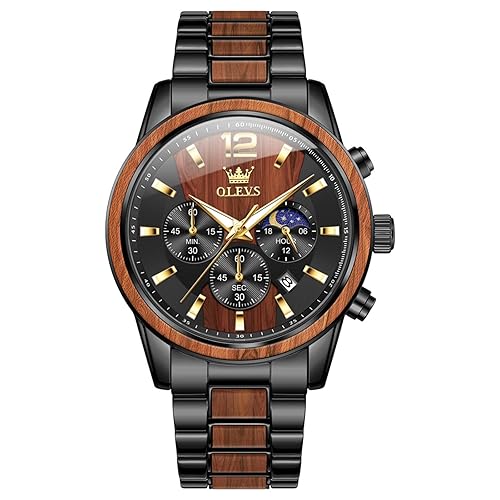
Wooden watches come on leather, canvas and silicone straps, on wooden bracelets or on mixed wood and steel bracelets. Straps are easy to replace and gentle on the wrist, while bracelets give a unified look but need careful sizing. Measure your wrist, check the strap length in the listing and look at the thickness of the case. A watch with a case that is too thick may catch on sleeves.
Reading the dial
Dials vary from plain minimalist faces to busy designs with subdials and date windows. Since wooden cases are often dark, a high-contrast dial and clear hands make the time easier to read. Check that the lume, if any, is described, and look for a scratch-resistant crystal. Mineral glass is common at lower prices, and sapphire is a stronger option for daily wear.
Product offers are temporarily unavailable.
Price and what to expect
Wooden watches are widely available from about $30 to $60 for basic quartz models. Mid-range pieces with better finishing, sapphire crystal or special woods typically run from roughly $100 to $300. A higher price usually buys a better seal, a more refined finish and better customer support. Prices change often, so check the current listing before you decide.
Looking after a wooden watch
Wipe it with a dry soft cloth after wear. Keep it away from heat, steam, direct sunlight for long periods, perfume and hand sanitizer. Store it in a box or pouch, away from sharp objects. If the surface looks dull, a small amount of wood-safe oil or wax can help, but follow the maker’s instructions. Quartz batteries last roughly one to two years, and a shop should replace them so that the case is closed and sealed correctly.
Wood versus other materials
Compared with steel, wood is lighter, warmer and more individual, but it is less durable and less water resistant. Compared with resin, it is more attractive and natural but less rugged. Many owners treat a wooden watch as a weekend or travel watch, while a steel or resin watch handles work and sport. This approach keeps the wooden watch looking good for longer.
Wooden watches as gifts
Because of their natural character, wooden watches are a popular gift for birthdays, weddings and anniversaries. Many sellers supply a wooden box, which makes presentation easy. Choose a neutral style such as walnut with a simple dial if you are unsure about taste, and check that the return policy covers sizing.
Mistakes to avoid
- Wearing the watch in the shower, pool or sea.
- Assuming a wood-look finish is solid wood.
- Choosing a size by the label instead of by your wrist.
- Leaving the watch in a hot or humid place.
- Skipping the return policy.
A short note on how wooden watches are made
Making a wooden watch starts with seasoned timber that has been dried so it does not warp. The case and sometimes the links are cut and shaped, sanded smooth and then sealed with a protective coating or oil. The quartz movement, dial and crystal are fitted inside, and the case back is closed with screws or a press fit. Careful makers test the finished watch for fit and seal. Because wood is a natural material, small variations in color and grain are normal and are part of the appeal.
How to compare two wooden watches
When two models look similar, compare them on a few points. First, check the wood and whether the listing says solid, veneer or composite. Second, compare the movement and battery details. Third, look at the crystal, since sapphire resists scratches better than mineral glass. Fourth, check the strap or bracelet quality and the clasp. Finally, compare the return policy and warranty, because a clear policy is a good sign of a seller who stands behind the product.
Everyday wear tips
Put the watch on after applying perfume or hand cream rather than before. Take it off when you cook, wash dishes or exercise heavily. If it feels loose, resize it rather than letting it slip around and knock on desks and door frames. Rotate between a wooden watch and another one so that the wood has time to rest, particularly in humid weather. These small habits keep the finish looking fresh for far longer than the average owner expects.
Watch strap materials compared
| Material | Strengths | Watch out for |
|---|---|---|
| Leather | Dressy, ages well, easy to swap | Not water resistant, needs care |
| Stainless steel | Durable, handles water and daily wear | Heavier and bulkier |
| Rubber or silicone | Water resistant, easy to clean, sporty | Can feel sticky in humid weather |
| Nylon or NATO | Light, breathable, quick drying | Casual look, edges can wear over time |
If you swim, pick rubber, steel or nylon rather than untreated leather.
FAQ
Are wooden watches made of real wood?
Reputable ones are, but check the listing. Some use a veneer or a wood-effect finish.
Do wooden watches last?
With care and no water exposure, they can last for years, and the battery is the main item to replace.
Can women wear wooden watches?
Of course. Many models come in smaller sizes and lighter woods, and unisex styles suit everyone.
Are wooden watches heavy?
No. They are usually much lighter than steel watches.
Verdict
Wooden watches are a good choice if you want something light, natural and individual. Choose a dense wood, a quartz movement from a known maker and a size that fits, keep the watch away from water and buy from a seller with a clear return policy.