Short answer: this guide explains how to choose wooden bracelet watches so you can pick with confidence, whatever the brand. The bracelet is the part that decides comfort and durability, so look closely at the links, the clasp and how the bracelet can be sized. A well-made wooden bracelet watch is light and distinctive, but it needs gentler treatment than a steel one.
What makes a wooden bracelet watch different
Most wooden watches come on a leather or fabric strap. A wooden bracelet watch has links made of wood, either all wooden or a mix of wood and metal, joined much like a steel bracelet. The look is bold and continuous, since case and band match. It is also a bigger commitment, because the bracelet takes the daily wear that a replaceable strap would otherwise absorb.
How the bracelet is built
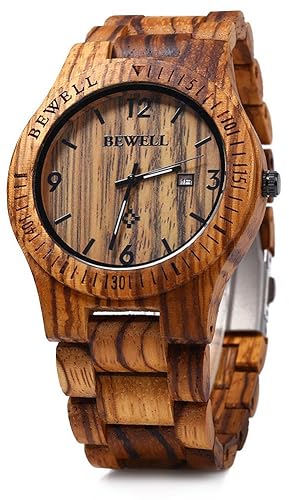
- All-wood links: each link is cut from solid wood and joined with small metal pins. They are the lightest option and have a very natural look.
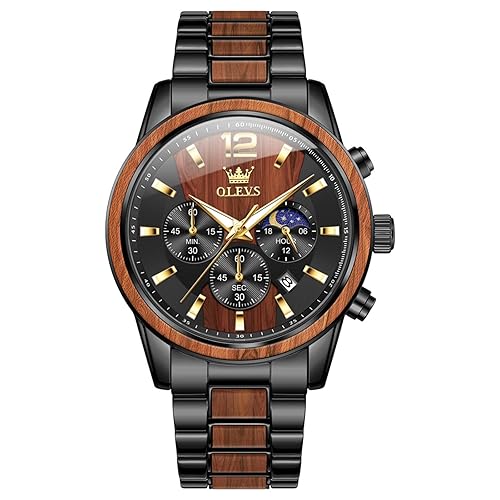
- Wood and metal links: stainless steel inserts or a steel core add strength where the stress is highest. They are usually more durable.
- Wood-faced links: a thin layer of wood over a metal link. These handle daily wear better, but the wood layer can wear at the edges.
The clasp matters just as much. A folding stainless steel clasp with a safety catch is more secure than a simple pin buckle, and it is a good sign when a listing names the clasp material.
Which woods suit a bracelet
Dense woods hold their shape and resist wear at the joints. Ebony, walnut, zebrawood and sandalwood are common. Lighter woods such as maple and bamboo can look attractive but may scratch more easily and need a good protective finish. Ask whether the wood has been sealed, because an untreated bracelet will mark and absorb moisture quickly.

Sizing the bracelet
Wooden bracelets are sized by removing or adding links, which is usually done by pressing out a small pin. Many watches come with a small tool and spare links in the box. Measure your wrist before you order and compare the number with the bracelet length in the listing. A good fit leaves enough space for one finger to slide under the bracelet. If the watch is too tight it can stress the pins, and if it is too loose it will slide and knock into things.
Take your time with resizing. Remove only one link at a time, and keep the spare links in a safe place in case your wrist size changes. If you are unsure, a watch shop can do the job in minutes and often at little cost.
Dual time and other features
Some wooden bracelet watches have two small subdials or a second time zone display, which is practical for travel. Others add a date window or a chronograph look. Check whether the extra dials are working functions or only decoration, because the listings do not always say. A simple three-hand watch is usually the more reliable choice and easier to read.
Product offers are temporarily unavailable.
Water and wood
Water is the main enemy of any wooden watch, and the joints between links give it more places to get in. Treat a wooden bracelet watch as splash resistant at best. Take it off before washing hands for long, showering or swimming, and wipe it dry if it gets wet. Do not wear it in a sauna or leave it on a sunny windowsill. If the bracelet swells or the finish turns cloudy, stop wearing the watch until it dries out fully.
Comfort and weight
A wooden bracelet is light, which is a big advantage on warm days and for people who dislike heavy steel. The surface also feels warmer against the skin. Check that the edges of the links are smoothed and that the inside of the bracelet does not catch hair or skin. A curved link design usually wraps around the wrist more comfortably than a flat one.
Price and what to expect
Wooden bracelet watches are sold from roughly $40 to $100 for simple quartz models, while those with steel reinforcement, sapphire crystal or rare woods can cost about $100 to $300 or more. Prices change from seller to seller, so check the current listing before you buy.
Caring for the bracelet
Wipe the watch with a soft dry cloth after wearing it, and keep it away from perfume, hand cream and sanitizer. Store it in a pouch or box so the links do not rub against hard objects. Occasionally check the pins and the clasp, and replace a worn pin before it fails. A quartz movement usually needs a new battery every one to two years, and it is best to have it replaced by a shop so the case is resealed correctly.
Mistakes to avoid
- Wearing the watch in water and expecting it to survive.
- Choosing an all-wood bracelet for heavy daily use.
- Removing too many links at once.
- Overlooking the clasp quality.
- Ignoring the case size and then finding the watch too large.
Wooden bracelet versus leather strap
If you are torn between a wooden bracelet and a strap, think about how you will use the watch. A bracelet gives a unified, finished look and feels substantial despite its light weight. A leather or fabric strap is easier to replace, more forgiving on a thin wrist and less likely to snap a link if you knock it. Some buyers choose a watch that ships with both, so they can switch between a dressier bracelet and a casual strap. If the listing includes a spare strap, that is a useful bonus.
Who a wooden bracelet watch suits
It suits people who want a watch with character that is comfortable in warm weather and looks natural with casual and smart-casual clothes. It is a good gift for someone who likes natural materials and individual design. It is less suited to heavy manual work, swimming or sport, where a steel or resin watch will cope better. If you spend most of the day at a desk or out walking, a wooden bracelet watch is a pleasant companion.
Buying checklist
- Name of the wood and whether it is solid or veneer.
- Bracelet construction: all-wood, wood with steel or wood-faced.
- Clasp material and type.
- Movement type and battery details.
- Case diameter, thickness and bracelet length.
- Return policy and warranty.
Gift ideas and presentation
A wooden bracelet watch makes a thoughtful gift for birthdays, anniversaries and graduations, because the grain makes it feel personal. Choose a size that suits the wearer, and keep the receipt in case the bracelet needs adjusting. Many makers supply a wooden or cloth presentation box, which doubles as safe storage. If you are buying for someone with a very small or large wrist, check that spare links or a longer bracelet are available before you order, since the fit is the most common reason for returns.
Watch strap materials compared
| Material | Strengths | Watch out for |
|---|---|---|
| Leather | Dressy, ages well, easy to swap | Not water resistant, needs care |
| Stainless steel | Durable, handles water and daily wear | Heavier and bulkier |
| Rubber or silicone | Water resistant, easy to clean, sporty | Can feel sticky in humid weather |
| Nylon or NATO | Light, breathable, quick drying | Casual look, edges can wear over time |
If you swim, pick rubber, steel or nylon rather than untreated leather.
FAQ
Are wooden bracelet watches comfortable?
Generally yes, because they are light, but check the fit and the edges of the links.
Can I resize a wooden bracelet?
Yes, by removing or adding links, usually with a small tool. A watch shop can do it for you.
Are they waterproof?
No. Assume splash resistance only, and keep them dry.
Are wood and metal bracelets better?
They are usually stronger, because steel reinforcement takes the stress at the joints.
Verdict
Wooden bracelet watches are light, characterful and comfortable when built well. Check the link construction, the clasp and the sizing method, keep the watch dry and enjoy a style that stands out from the usual steel look.